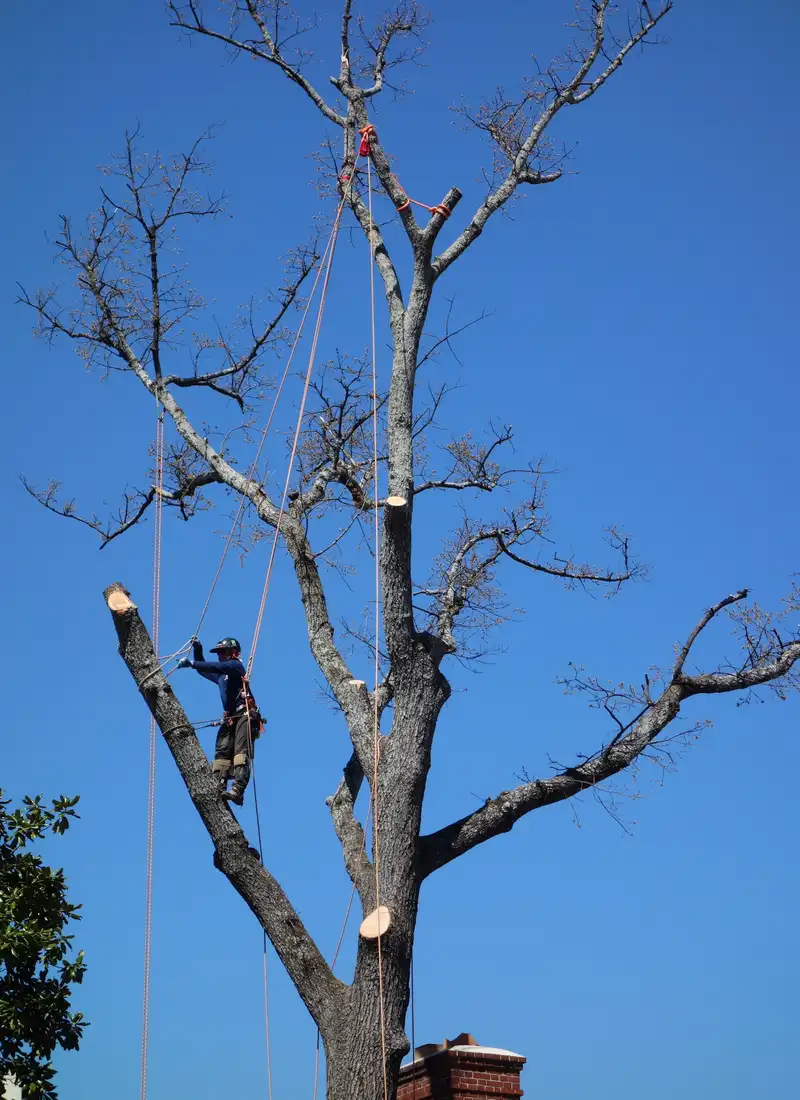
Removing a tree in Milton? Which trees need a permit in Milton
According to the City's tree removal guidelines for homeowners, a tree removal permit is required for:
- Protected trees: any tree 15 inches DBH or larger. DBH is diameter at breast height, measured 4.5 feet above the ground; the ordinance calculates it by dividing the trunk's circumference by 3.14.
- Small canopy trees 8 inches DBH and larger, such as dogwoods and redbuds.
- Any tree in a landscape, stream or zoning buffer, regardless of size.
Sec. 60-8 makes removing a protected tree, or disturbing its critical root zone or structural root plate, without a permit a violation. Sec. 60-34(b) says that can bring a stop work order, notice of violation or citation for the owner and anyone involved in the cutting, including the tree company.
Dead, unhealthy and invasive trees still need a permit
This is the rule that surprises most homeowners. Sec. 60-34(d) requires a tree removal permit for a dead, unhealthy or invasive tree. The difference is cost: Sec. 60-34(e) waives the application fee for those trees. The ordinance also addresses removals made without a permit because of an imminent threat or emergency; if a tree is actively failing, make it safe and contact the City Arborist promptly about documentation.
What the permit costs
Milton's fee schedule lists the Tree Removal Permit at $25 per healthy tree removed, with a maximum fee of $150, and states the fee does not apply to dead or unhealthy trees. Replacement planting, if required, is a separate cost, as is the tree work itself.
How to apply: CityView portal or paper
The City's Tree Removal & Registration page directs applicants to the Milton CityView Web Portal. The homeowner guidelines describe what to include:
- A list of trees to be removed by species and size (if you are unsure of species, note pine, hardwood or evergreen).
- A simple hand-drawn sketch showing where the trees are.
- Your tree removal company's information.
- Your contact information.
Paper applications can be emailed to [email protected], dropped off at City Hall or mailed there. Under Sec. 60-34(f), the City makes a site visit or uses other appropriate means to inspect the trees within ten days of the application. After review, the City emails the conditions and fees, including any replanting.
Replanting and canopy cover
The City says replacement requirements depend on lot size, zoning and existing canopy coverage. Sec. 60-34(h) adds that the administrator considers the canopy on the lot, the canopy proposed for removal and the number of tree removal permits approved for the lot in the last five years. If replanting is required, Sec. 60-34(g) calls for a signed landscape contract or a written planting statement listing quantity, size and species, plus a schedule, before the permit is issued.
Specimen trees
Sec. 60-9 defines a specimen tree as a healthy tree, documented by a certified arborist and verified by the city arborist, that meets one size test: a hardwood of at least 24 inches DBH in the large or medium mature height class; any tree of at least 8 inches DBH in the small mature height class; or a pine, sweetgum or tulip-poplar of at least 27 inches DBH. If removal is approved, replacement is 150 percent of the square feet of canopy removed. The fee schedule says unpermitted removal or root-zone damage doubles the specimen tree's unit value for compensation.
Stream buffers and trees near water
Milton's Land Development FAQ says the City's stream buffers are 50 feet measured from the stream bank, and the next 25 feet may not include impervious surface such as concrete, asphalt or stone. Within the undisturbed buffer, owners may do some selective thinning or trimming if protective vegetation and a canopy shading the stream remain; mechanized removal, including bobcats, bulldozers and chain saws, is not permitted. The City's tree removal FAQ notes that violations can bring penalties from both Milton and the Georgia Environmental Protection Division. Check with Community Development before touching a buffer tree.
Development, pools and additions
For building projects, the City's developer guidance says site plans must show trees 15 inches DBH or larger that will be removed or affected, including for pools and additions, and at least one-third of required canopy coverage must come from existing trees.
Penalties
The fee schedule lists penalties for violations not to exceed $1,000 per violation per day. A tree company that cuts without a permit can be cited along with the owner, so ask any crew to confirm the permit is issued before work starts.
Official fees and limits
| Item | Official fee or limit | Source |
|---|---|---|
| City of Milton tree removal permit application | $25 per healthy tree, $150 maximum; no fee for dead or unhealthy trees | City of Milton fee schedule |
| City of Alpharetta tree removal permit submittal | No fee | City of Alpharetta permit instructions |
| Homeowners debris removal for wind-felled trees (policy form described by Georgia OCI; only if the tree damages covered property) | Up to $500 | Georgia OCI disaster guide |
Sources: City of Alpharetta, Online Tree Removal Permit instructions ("There are NO fees associated with a Tree Removal Permit submittal"); Georgia Office of Commissioner of Insurance, Insurance Before and After a Disaster (PDF). Other official rows are sourced under Local rules and code references below. No public agency publishes tree-service contractor prices, so none are shown.
Local rules and code references
- City of Milton Code of Ordinances, Chapter 60, Tree Canopy Conservation (Municode): DBH definition; Sec. 60-8 protected trees; Sec. 60-9 specimen trees; Sec. 60-34 tree removal permit.
- City of Milton, Tree Removal Guidelines: 15-inch DBH, 8-inch small canopy and buffer triggers; what to submit.
- City of Milton, Tree Removal & Registration: apply via the Milton CityView Web Portal; stream and lake FAQ.
- City of Milton, Fee Schedules: $25 per healthy tree, $150 maximum; penalties.
- City of Milton, Land Development FAQ: 50-foot stream buffer plus 25-foot impervious setback.
Code text and department procedures change; confirm current requirements with the City of Milton before work starts.